Overview
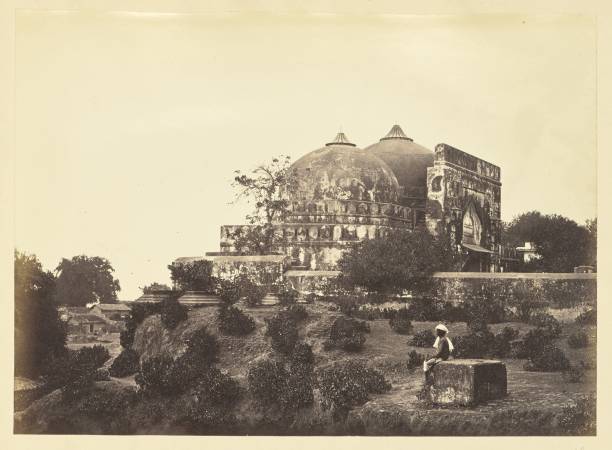
The Babri Masjid stands as a testament to both architectural magnificence and historical tragedy. Built in 935 Hijri (1528-29 CE) during the reign of Mughal Emperor Babur by his commander Mir Baqi in the city of Ayodhya,[1] this mosque served as a place of worship for nearly five centuries before being demolished in one of the darkest chapters of modern Indian history.
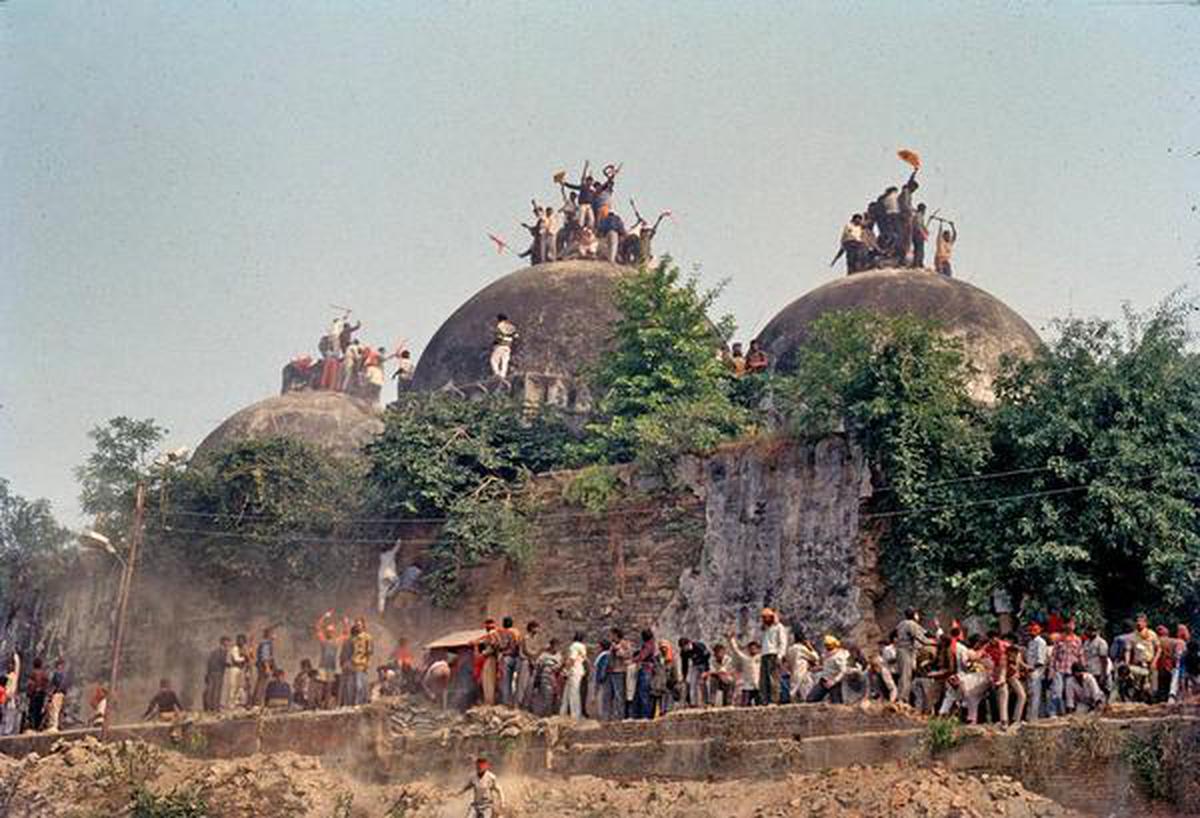
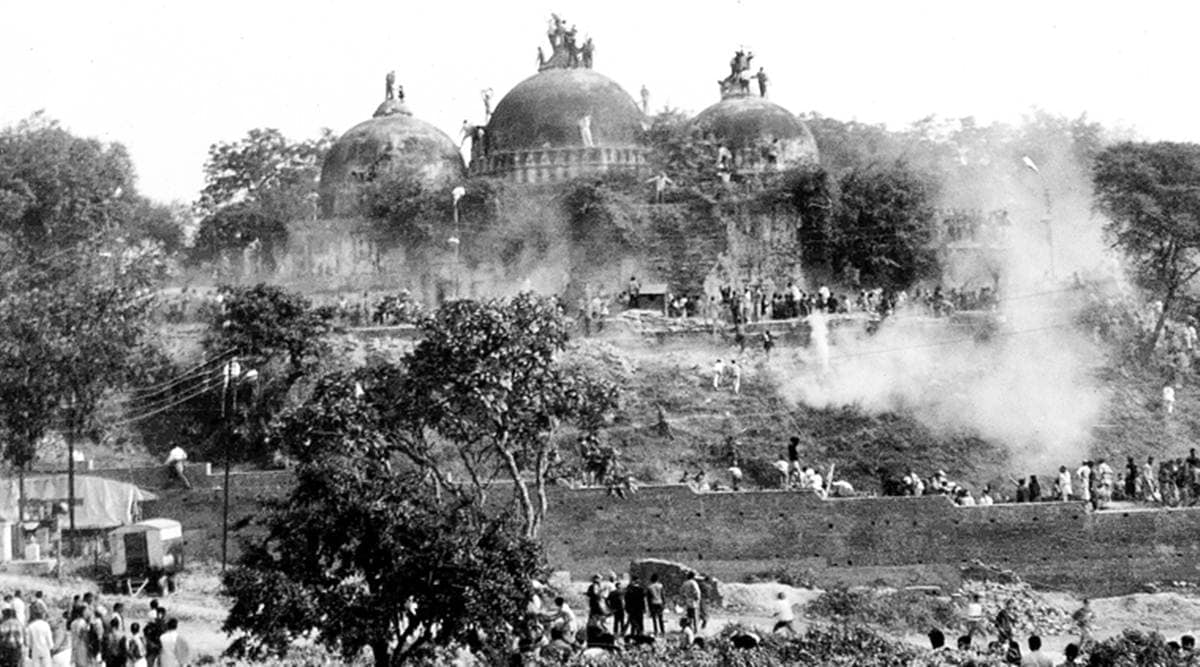
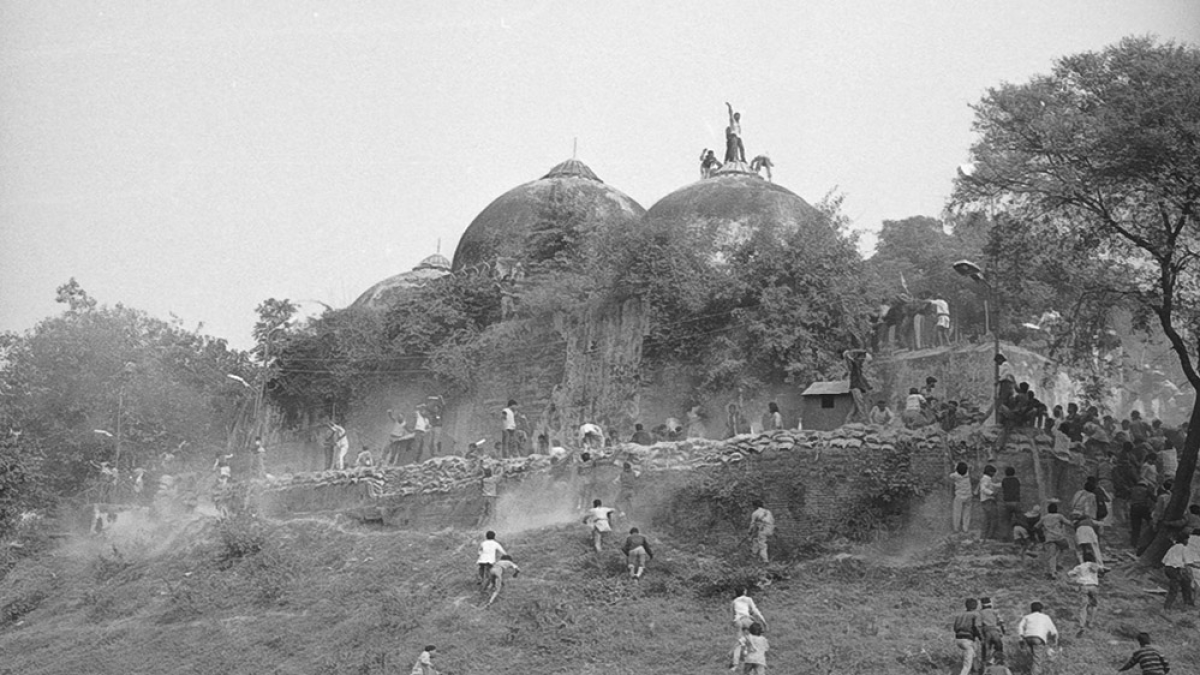
For 464 years, Muslims peacefully offered prayers in this sacred space.[2] The mosque witnessed countless generations of believers, standing as a symbol of religious harmony and architectural excellence. However, what began as a colonial-era conspiracy to divide Hindu and Muslim communities culminated in the tragic demolition on December 6, 1992, when a frenzied mob of approximately 150,000 kar sevaks destroyed this historic monument.[1]
Initial History and Architecture
The Foundation (1528-29 CE)
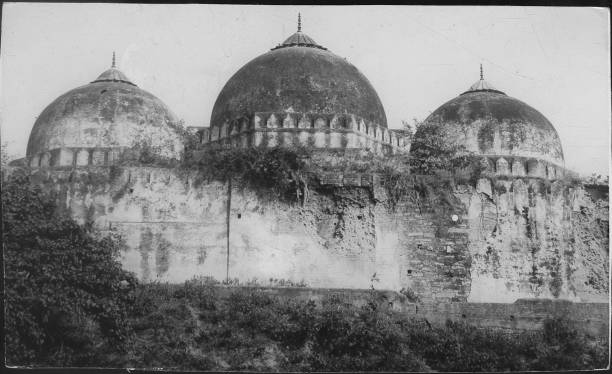
During the governance of Mughal Emperor Babur, his esteemed military commander Mir Baqi constructed a magnificent mosque in Ayodhya in 935 Hijri (1528-29 CE).[3,1] This mosque, which came to be known as Babri Masjid, was built according to proper Islamic architectural principles on legitimately acquired land. Stone inscriptions on the mosque bore testimony to its construction date and praised the glory of Emperor Babur.[2]
According to Islamic jurisprudence (fiqh), as documented in classical Islamic legal texts, mosques can only be built on legitimately owned land.[4,2] The detailed Islamic legal requirements for mosque construction include:
- The land must be acquired through halal (lawful) means
- No other party can have rights over the property
- Construction on forcibly occupied land is completely prohibited
- All stakeholders must provide consent if the land has multiple owners
At the time of construction and immediately thereafter, there was no protest or objection from the local Hindu population.[2] The mosque served the Muslim community peacefully for over three centuries without any dispute regarding its legitimacy or location.
Past Glory and Significance
Ayodhya: A Multi-Faith City
Ayodhya, which later became part of Faizabad, was known as a Muslim-populated city, having served as the capital of the Nawabs of Awadh.[2] The city was home to numerous Islamic scholars, saints, and their shrines, making it a center of Islamic learning and spirituality.
The city contained many significant Islamic sites, including the tombs of various saints such as:
Hazrat Sheesh (AS) - believed to be buried in Ayodhya[5,2]
Lal Shah Baba Kalandar (RA), Janjot Shaheed (RA), Shah Madar (RA)[2]
Syed Jalaluddin Khorasani (RA) and numerous other Islamic scholars[2]
Architectural Excellence
According to the 1881 Gazetteer by DD Hunter about Ayodhya, the city contained 36 mosques of various sizes.[6,2] The Babri Masjid stood among them as a testament to Mughal architectural prowess. The mosque was constructed in a style developed under the Lodi dynasty: small with a single aisle arrangement of three domed bays along the qiblah wall.[3]
The mosque served not just as a place of worship, but as a community center where Muslims gathered for daily prayers, Friday congregations, and Islamic festivals. For nearly five centuries, it remained a peaceful sanctuary for believers.
History of Conspiracy
The Colonial Seeds of Division
The controversy surrounding Babri Masjid did not emerge naturally from within Indian society. Rather, it was deliberately manufactured by British colonial authorities as part of their "divide and rule" strategy.[2]
The British colonialists systematically propagated the false narrative that Muslims destroyed temples wherever they went and built mosques in their place. This was a calculated strategy to create permanent divisions between Hindu and Muslim communities.
First claims made by a group of Hindu "Sadhus" asserting ownership of the site. This marked the beginning of organized attempts to stake claim to the mosque.[1,3]
Violent clashes erupted between Hindus and Muslims over Hanuman Garhi temple. Seventy-five Muslims died in the conflict. The administration erected a wall within the mosque premises to separate the areas, with Muslims praying inside and Hindus worshipping outside at a raised platform (chabutra).[2,7]
British colonial administration officially partitions the site into two separate sections for Hindus and Muslims, institutionalizing the division.[1,8]
The Role of British Officials
British officials like P. Carnegy (1870) and Alexander Cunningham (1871) produced reports that, while lacking historical evidence, suggested ancient temples had existed at various Ayodhya sites. These reports were based on local hearsay rather than archaeological or documentary evidence.[2]
Cunningham himself admitted in his report that Ayodhya had been completely destroyed around 1426 CE and remained desolate until its re-establishment. He wrote that by his time (1871), "more than half the city area is uninhabited" and showed signs of decay everywhere.[9,2] Yet these same reports were used to fuel religious tensions.
Case Files and Legal Battles
The Long Road Through Courts
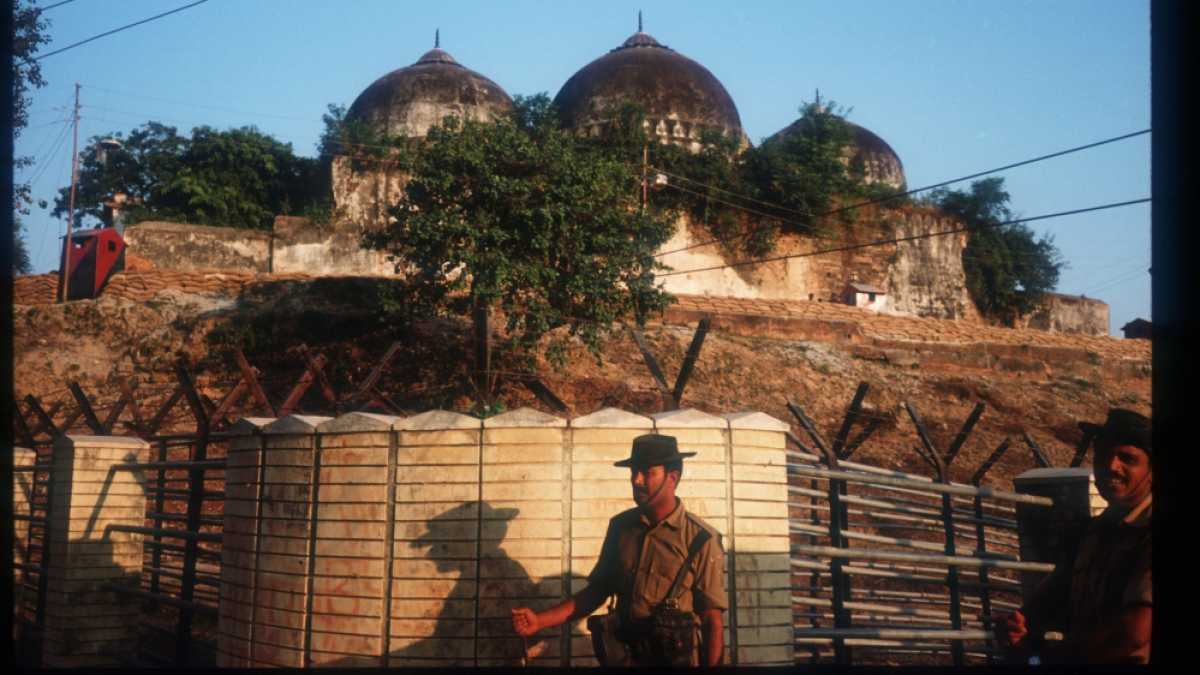
The legal battle over Babri Masjid spanned 134 years of litigation, making it one of the longest-running court cases in Indian history. Throughout this period, no concrete historical evidence was ever presented proving that a Ram temple was demolished to build the mosque.
The mosque remained locked after idols were placed inside. Multiple petitions were filed by Muslim organizations demanding restoration of the mosque for worship, but progress was deliberately delayed.
The Vishwa Hindu Parishad (VHP) formed a committee to "liberate" the birthplace of Ram and construct a temple. BJP leader Lal Krishna Advani led this campaign, which would have devastating consequences.
In a controversial decision, a district judge ordered the mosque's doors to be opened for Hindu worship. Prime Minister Rajiv Gandhi welcomed this decision, hoping to regain Hindu support after the Shah Bano case. Muslims formed the Babri Masjid Action Committee in protest.
Former intelligence officer Maloy Krishna Dhar revealed in his book that RSS, BJP, and VHP leaders had planned the mosque's demolition ten months in advance. He stated he had recorded their meeting and reported it to his superiors, including Prime Minister Narasimha Rao.
The Liberhan Commission report named 68 people involved in the demolition, most of them BJP leaders, including Atal Bihari Vajpayee, Advani, Murli Manohar Joshi, and Vijaya Raje Scindia.
Allahabad High Court ruled to divide the land three ways: between Sunni Waqf Board, Nirmohi Akhara, and Ram Lalla. This gave Hindus two-thirds of the land and Muslims one-third. All parties appealed to the Supreme Court.
The 2019 Supreme Court Verdict
On November 9, 2019, India's Supreme Court delivered its final verdict in what many have called a "judgment of shame" rather than justice.[2] The court:
- Acknowledged that the 1992 demolition was illegal and unjust[1]
- Admitted no evidence proved a temple existed before the mosque[2]
- Yet awarded the entire 2.77-acre site to a trust for building a Ram temple[1,7]
- Directed the government to give Muslims an alternative 5-acre plot elsewhere[1]
Former Supreme Court Judge Ashok Ganguly raised critical legal questions: "If it's proven that Babri Masjid stood there for five centuries, and even the Supreme Court acknowledges it was demolished unlawfully, then how can the site be awarded for temple construction based on unproven claims from before 1528?"[2]
The verdict was widely condemned internationally. The New York Times wrote: "India's Supreme Court ruled in favor of Hindus in a decades-old dispute over contested land, marking a major victory for Modi and his followers who want to move India away from its secular foundations toward a path of Hindu nationalism."[2,10]
The Demolition and Ram Mandir Construction
December 6, 1992: A Premeditated Destruction
On December 6, 1992, approximately 150,000 VHP and BJP kar sevaks gathered in Ayodhya under the pretext of a "ceremonial gathering."[1] BJP leaders including L.K. Advani, Murli Manohar Joshi, and Uma Bharti delivered inflammatory speeches.[2] What followed was not a spontaneous outburst but a meticulously planned operation.
Security barriers around the mosque were deliberately kept weak. Police stood by as passive observers while the mob grew increasingly aggressive.[3,11]
The mob breached security, scaled the mosque's domes, and planted saffron flags. Using pickaxes, hammers, and iron rods brought specifically for this purpose, they began systematically demolishing the structure.[2]
The 464-year-old historic mosque was reduced to rubble. What had taken skilled craftsmen months to build in 1528 was destroyed in mere hours by a frenzied mob.[1]
The Aftermath: Violence and Loss
The demolition triggered communal riots across India that claimed over 2,000 lives, most of them Muslims.[1,12] In Bangladesh, massive protests erupted, with the historic Long March organized by Shaykh al-Hadith Azizul Haq (RA) demonstrating solidarity with the Babri Masjid cause.[2]
Former Home Secretary Madhav Godbole confirmed that the central government had prepared an extensive security plan to prevent the demolition, including invoking Article 356 of the Constitution. However, Prime Minister P.V. Narasimha Rao deliberately chose not to implement these measures, essentially allowing the demolition to proceed.[2,13]
The demolition was not about religion or history. It was about establishing Hindu supremacy and demonstrating to India's Muslim minority that their rights and sacred spaces could be violated with impunity.
The Ram Mandir Construction
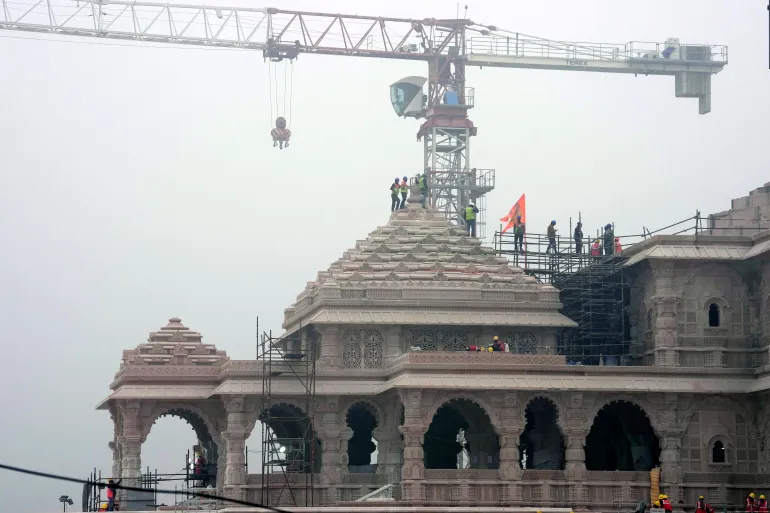
Following the 2019 Supreme Court verdict, construction of the Ram temple began on the ruins of Babri Masjid. The foundation stone was laid by Prime Minister Narendra Modi amid great fanfare in August 2020. The temple was officially opened on January 22, 2024.[1,7] For India's Muslim community, this represented not resolution but the final insult - seeing their historic mosque replaced with a structure built through injustice.
Reflections and the Path Forward
A Stain on Justice
The Babri Masjid tragedy stands as a testament to how historical injustice can be legitimized through legal manipulation, political connivance, and majoritarianism masquerading as justice. The Supreme Court's 2019 verdict, while acknowledging the illegality of the demolition, ultimately rewarded the perpetrators by granting them the very prize they had sought through violence.
As former judge Ashok Ganguly noted, the court's role is not to reconstruct history based on speculation, but to deliver justice based on evidence and established facts. The evidence clearly showed:
- Babri Masjid existed for 464 years as a functioning mosque
- No contemporary evidence proved a temple was demolished to build it
- The mosque was demolished illegally in 1992
- The demolition was premeditated, not spontaneous
Lessons from History
The Babri Masjid case reveals several critical truths about contemporary India:
The same secularism that India's constitution proudly proclaims has been repeatedly violated when it comes to protecting Muslim rights and sacred spaces. The gap between constitutional ideals and ground reality has never been wider.
The fears expressed by Muslim leaders in 1947 - that in a Hindu-majority India, Muslims would face systematic discrimination and be unable to practice their faith freely - have been tragically validated. From the National Register of Citizens (NRC) targeting Muslims, to the abrogation of Article 370 in Kashmir, to the Babri Masjid verdict, a pattern of marginalization is unmistakable.
The Broader Implications
Babri Masjid is merely the beginning. Hindu nationalist organizations have already identified other mosques - including the Gyanvapi Mosque in Varanasi and the Shahi Idgah in Mathura - as their next targets. This systematic campaign threatens India's pluralistic fabric and endangers countless historic Islamic sites.
The complicity of India's major political parties - both BJP and Congress - in anti-Muslim policies demonstrates that this is not merely a partisan issue but a deeper crisis of India's commitment to secularism and equal citizenship.
Faith Endures
Despite this grave injustice, the Muslim community's faith remains unshaken. History teaches us that sacred spaces once established for Allah's worship ultimately return to their true purpose. The example of Baitul Masjid al-Aqsa, which has survived centuries of occupation and desecration, offers hope.
According to Islamic jurisprudence, once a piece of land is designated as a mosque (waqf), it remains so in perpetuity. Even if forcibly occupied, it automatically reverts to its status as a mosque once liberation occurs. This principle offers solace to those who mourn the loss of Babri Masjid.
Muslims do not need charity in the form of alternative land. Babri Masjid stood on its rightful ground for nearly five centuries. What was taken by force and injustice will, by Allah's will, one day return to its rightful purpose - the worship of the One True God.
A Call for Truth and Justice
The Babri Masjid tragedy compels us to:
- Preserve accurate historical records against revisionist narratives
- Stand firm against majoritarianism and religious extremism
- Demand accountability for those who planned and executed the demolition
- Support India's Muslim minority in their struggle for equal citizenship
- Recognize that true secularism requires protecting minority rights, not just majority rule
The world watched in 1992 as a historic mosque was demolished. The world watched again in 2019 as India's highest court legitimized that destruction. Let history record that while systems of justice may fail, the cause of truth and righteousness never dies.
In Memoriam
Babri Masjid: 935 AH (1528 CE) - 1413 AH (1992 CE)
464 years of devotion, destroyed in hours of hatred
May Allah accept the sacrifices of all who defended it
إِنَّا لِلَّٰهِ وَإِنَّا إِلَيْهِ رَاجِعُونَ
Surely we belong to Allah and to Him we shall return